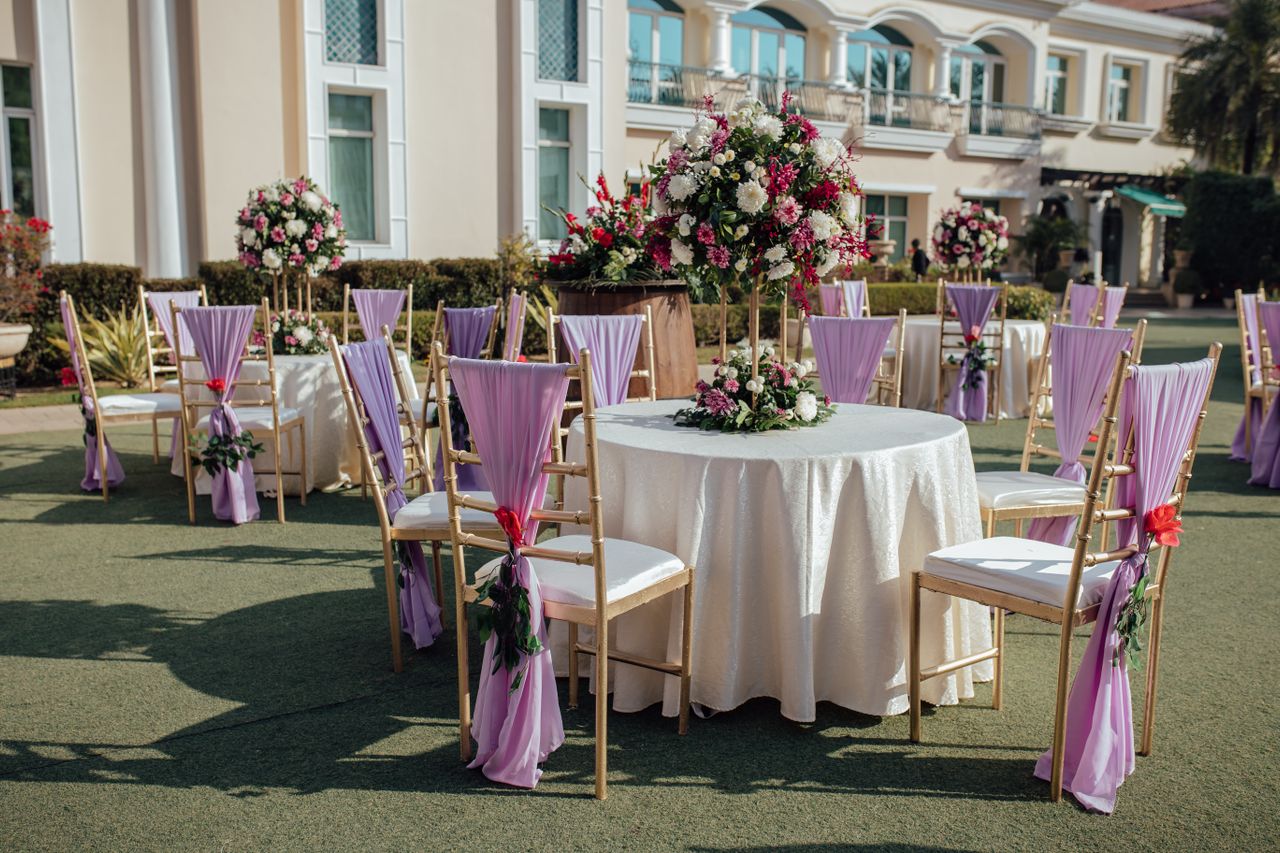
Event decoration is one of those businesses where creativity can be converted directly into revenue. A plain hall can become a luxurious wedding venue, a small room can become a magical birthday setup, and an ordinary office entrance can become an impressive corporate installation when the right decorator combines flowers, lighting, fabric, balloons, props, furniture, signage and thoughtful design. In India, this opportunity is particularly interesting because celebrations are deeply connected with family, culture, festivals and social occasions. Weddings alone create a huge ecosystem of spending across venues, catering, photography, fashion, entertainment, flowers, lighting and décor. A 2025 CAIT estimate projected 46 lakh weddings and ₹6.5 lakh crore of business during the November 1–December 14 wedding season, illustrating the enormous commercial activity surrounding Indian celebrations. Current industry research also points toward continued growth in event decoration, with wedding décor, floral arrangements, balloon art, theme installations, lighting and stage décor all identified as important segments. The exciting part for a new entrepreneur is that you do not necessarily need a huge showroom or a large inventory to start. You can begin with a small collection of reusable décor items, rent specialized equipment when necessary, work with freelancers and concentrate on a specific locality. Your first goal should not be to decorate enormous celebrity weddings. It should be to create ten excellent events, photograph them professionally, collect testimonials and build a reputation that makes customers comfortable paying you in advance. Once that foundation is established, the business can grow from simple balloon setups into wedding stages, engagement décor, corporate installations, festive displays and complete event styling.
Why Event Decoration Is a Growing Business
The Indian event industry is moving toward more personalized and experience-driven celebrations, which creates opportunities for decorators who can offer something beyond standard curtains and balloons. Couples increasingly want weddings that reflect their personalities, families want memorable birthday environments, businesses want branded spaces for launches and celebrations, and malls increasingly use themed décor to attract visitors. Recent reporting from Indore, for example, described malls investing heavily in Instagram-friendly festive installations, with some décor budgets reaching ₹7–8 lakh and operators reporting increased footfall following themed events and entertainment. This tells you something important about the modern decoration business: décor is no longer merely background material. It can become part of the experience itself. Guests photograph it, post it, remember it and sometimes use it as the visual identity of the event. That makes design quality commercially valuable. Industry research also identifies personalization, immersive experiences and experiential marketing as significant trends in India’s wider event-management market. For an entrepreneur, this means there is room at several price points. A ₹3,000 birthday setup, a ₹15,000 engagement backdrop, a ₹50,000 wedding package and a multi-lakh corporate installation can all belong to the same broader business. The key is not to offer everything from day one. Choose a customer segment, understand its budget and expectations, then create a recognizable style around it.
India’s Expanding Celebration Economy
India’s wedding economy alone is large enough to support thousands of specialized vendors. A SEBI-filed industry document citing CAIT, industry interviews and Frost & Sullivan estimated 4.86–6.62 million weddings and ₹8,000–16,000 billion in total wedding spending for FY24, depending on the estimate scenario. Another industry source estimates the Indian wedding-services market at more than $100 billion in 2024, with continued growth expected through 2030. These figures should not be interpreted as a guarantee that every decorator will make money, but they demonstrate the scale of the customer ecosystem. A wedding involves many individual purchasing decisions, and décor is one of the most visible. The opportunity also extends beyond weddings. Birthdays happen throughout the year, baby showers and naming ceremonies create recurring demand, anniversaries require smaller but profitable setups, schools organize annual functions, businesses hold launches and award ceremonies, and festivals create seasonal decoration requirements. This variety helps reduce dependence on a single event category. A decorator who works only on weddings may experience seasonal fluctuations, while one who handles birthdays, corporate events and festive installations can create a broader calendar. The best strategy is therefore to think of event decoration as a service business, not simply a wedding business.
Weddings, Birthdays and Corporate Events
Each event category requires a different approach. Weddings generally offer the largest ticket sizes but also involve greater expectations, longer preparation times and more coordination with other vendors. Birthday decoration can be easier to sell and execute, especially when focusing on home parties, restaurants and small banquet halls. Corporate décor can be particularly valuable because businesses may require professional branding, entrance installations, stage backdrops, product-launch displays and festive office décor. Corporate clients may also become repeat customers, which is attractive for long-term growth. The challenge is that corporate buyers often care about invoices, timelines, safety, professionalism and brand consistency just as much as visual creativity. Private customers, on the other hand, may make decisions emotionally and visually. They may select you because they saw a beautiful Instagram Reel. Understanding this difference allows you to create different sales processes. A wedding customer may want a mood board and detailed décor proposal, while a birthday customer may simply choose Package A, B or C. Corporate customers may require a formal quotation, dimensions, branding guidelines and installation schedule. One business can serve all three markets, but each needs a different sales conversation.
Is Event Decoration a Profitable Business?
Event decoration can be profitable because customers are paying for much more than physical materials. They are paying for design, labor, transportation, setup, dismantling, coordination, convenience and the confidence that everything will look right when guests arrive. A balloon arch may contain inexpensive materials, but the customer is not simply purchasing balloons. They are purchasing the finished visual result and the removal of the stress involved in creating it. This distinction is important when setting prices. If you calculate your price only by adding up the cost of balloons and flowers, you will almost certainly undercharge. Your quotation needs to cover transportation, assistants, setup time, teardown, damaged or consumable materials, equipment depreciation, storage, design work, administrative costs and profit. The business becomes especially attractive when you purchase reusable assets that can be deployed across multiple events. Backdrops, arches, artificial flowers, stands, panels, lights, tables, plinths and props can generate revenue repeatedly. A ₹20,000 backdrop system that is rented or included in packages dozens of times can become much more valuable than a one-time decorative purchase. The objective is to build an inventory library where every item has a purpose and earning potential. You should constantly ask: How many times can I use this item? How much storage does it require? What events can it serve? How quickly can my team install it? This turns decoration from artistic improvisation into a measurable business.
Choosing the Right Business Model
There are several ways to enter the event-decoration industry. The first is an asset-light model, where you own only basic equipment and rent larger items from wholesalers or other decorators. This requires less capital and lets you test demand. The second is an inventory-based model, where you gradually build your own collection of backdrops, artificial flowers, lights, furniture and props. This can improve margins over time but requires storage and maintenance. The third is a design-and-execution model, where you primarily sell creative concepts and outsource or rent much of the physical infrastructure. The fourth is a full-service event décor company, handling design, procurement, transportation, installation and dismantling. A new entrepreneur should generally avoid buying everything immediately. Start asset-light, identify the products that customers request most often and then purchase those items when repeated rental costs justify ownership. Think of your inventory as a fleet of taxis: every vehicle that sits unused in the parking lot represents money that is not working. The goal is not to own the biggest collection in town. The goal is to own the right collection.
Types of Event Decoration Services
An event decorator can build several revenue streams from a relatively similar inventory. Balloon decoration is one of the easiest entry points because it can serve birthdays, baby showers, anniversaries and small celebrations. Backdrop decoration can be used for birthdays, engagements, weddings and corporate events. Floral arrangements can be sold as table décor, stage décor, entrance décor and photo installations. Lighting can dramatically change the appearance of a venue and can be bundled into premium packages. Theme decoration allows customers to request specific concepts such as royal, floral, Bollywood, jungle, cartoon, minimalist, traditional or contemporary designs. The market research landscape for Indian event decoration explicitly segments the industry into areas such as floral arrangements, balloon art, theme installations and light and stage décor, as well as weddings, parties, corporate events and concerts. This segmentation gives a new business plenty of room to specialize. You might become the local expert in luxury floral wedding stages. Or you could become known for affordable birthday setups. Or perhaps your strength is corporate and festive installations. Specialization makes marketing easier because customers immediately understand what you are good at.
Wedding and Engagement Decoration
Wedding and engagement décor can become the highest-value part of an event-decoration business, but it requires a stronger portfolio and more sophisticated execution. Customers may request mandap decoration, stage design, entry gates, floral installations, varmala stages, photo booths, dining-area décor, table centerpieces, aisle décor and lighting. Indian wedding décor is also increasingly influenced by personalized themes and visual storytelling. A 2025–26 WedMeGood industry report described modern Indian weddings as increasingly personal and curated celebrations rather than simply standardized traditional events, with surveyed wedding spending reaching ₹39.5 lakh among its respondent base. That trend favors decorators who can translate a couple’s preferences into a coherent visual concept. Instead of showing a customer fifty random photographs, show them a complete design: color palette, backdrop, floral style, entrance, stage, table details and lighting. Explain what can be reused, what is fresh, what is rented and what affects the price. This professional approach immediately separates you from informal decorators who provide only a rough verbal quote. Weddings are emotional purchases, so customers want reassurance. Your portfolio, contract, timeline and communication should make them feel that their event is in safe hands.
Birthday and Private Party Decoration
Birthday decoration is often an excellent starting point because the ticket size can be smaller and the sales cycle faster. Parents may want a child’s favorite character, teenagers may prefer a trendy photo wall, couples may want romantic anniversary décor, and adults may request elegant dinner-party styling. These events can often be completed in a few hours, making them suitable for building experience. A strong birthday package should be easy to understand. Instead of asking the customer to design everything themselves, offer three or four concepts with different price levels. A basic package might include a balloon backdrop and name board, while a premium option could add themed props, LED numbers, artificial flowers, cake-table styling and customized signage. This makes the buying decision simpler. You can also create add-ons such as cake-table decoration, welcome boards, neon signs, photography corners and personalized props. The goal is to increase the average order value without making the core package unnecessarily complicated. Birthday decoration also creates excellent social-media content because before-and-after transformations are visually powerful. One ordinary room can become a portfolio piece within an afternoon.
Corporate and Festival Decoration
Corporate and festival decoration can provide valuable off-season revenue. Offices may require Diwali installations, annual-day stages, conference backdrops, product launches, employee celebrations, award ceremonies and branded photo areas. Retail stores and malls may need festive installations that attract customers and encourage social-media sharing. Recent reporting from Indore showed that themed mall décor was being used specifically to increase footfall and customer engagement, with some operators reporting measurable improvements in visits after investing in experience-focused installations. This demonstrates why commercial décor can be different from private-event décor: the decoration is sometimes a marketing asset rather than simply an aesthetic service. A retailer may pay more for a design that photographs well and reinforces its brand. A corporate client may need its logo, brand colors and product integrated into the installation. This requires decorators to understand basic branding, typography, spatial planning and safety. Corporate work can also create repeat business. If you successfully decorate one company’s Diwali office setup, that client may call you again for Holi, annual day, product launch or another office celebration. Building these relationships can stabilize your calendar outside wedding season.
Startup Cost for an Event Decoration Business
The investment required depends heavily on the business model. Someone starting with home birthday decoration may be able to begin with a relatively small budget, while a wedding décor company with large backdrops, artificial floral inventory, lighting, furniture and transportation may require several lakhs. A practical beginner should consider an asset-light startup first. Basic equipment could include balloon tools, pumps, stands, backdrop frames, clamps, extension boards, basic lighting, artificial flowers, fabrics, signage materials, ladders and storage boxes. Specialized furniture, premium floral arrangements, large stages and expensive lighting can initially be rented. A rough planning range might look like this:
| Startup Level | Approximate Investment | Suitable For |
|---|---|---|
| Lean home-based | ₹30,000–₹75,000 | Birthdays, anniversaries, small parties |
| Small professional setup | ₹75,000–₹2 lakh | Birthdays, engagements, small weddings |
| Growing décor business | ₹2–₹5 lakh | Weddings, corporate and larger events |
| Full-service setup | ₹5 lakh+ | Large weddings, venues and corporate work |
These are illustrative planning ranges rather than fixed market prices. Your actual costs will depend on your city, supplier relationships, storage requirements, transportation, equipment quality and event category. The smartest approach is to buy equipment only after seeing which services generate repeated demand. If customers constantly request a particular backdrop, buying one may make sense. If you use a particular lighting system every weekend, ownership can improve your margins. If an item is requested once every six months, renting it may be more sensible. Capital discipline is one of the biggest differences between a profitable decorator and an expensive hobby.
Essential Decoration Equipment
A new decorator does not need to buy an entire warehouse of props. Start with versatile equipment that can be used across multiple event types. Backdrop stands, adjustable frames, balloon stands, artificial flower panels, drapes, fairy lights, LED numbers, plinths, basic signage boards, extension cables, cable covers, ladders, tools and storage containers can form a useful foundation. Quality matters because equipment gets transported, assembled, dismantled and transported again. Cheap stands that bend after a few events can create greater costs than buying durable equipment initially. You should also maintain a detailed inventory list with photographs, purchase prices and current condition. Label your items so the team can load and unload quickly. Every event should have a checklist. Missing one critical clamp or extension cable can create unnecessary stress on installation day. As the company grows, divide inventory into categories: backdrops, flowers, lighting, balloons, furniture, props, tools and consumables. This makes purchasing and maintenance easier. Remember that the equipment is not the business. The business is your ability to transform that equipment into attractive designs quickly and profitably.
How to Price Decoration Packages
Pricing should begin with a cost sheet, not a competitor’s Instagram post. Calculate material costs, rental costs, labor, transport, setup time, dismantling, storage, consumables and a reasonable profit margin. Then create packages that are easy for customers to understand. For example, a birthday decorator could offer Basic, Classic and Premium packages. A wedding decorator might create separate décor categories for engagement, haldi, mehendi, sangeet and wedding day. This allows customers to build a package while giving you opportunities for cross-selling. Avoid saying, “Decoration starts at ₹5,000,” and then surprising the customer with additional charges for everything they expected to be included. Instead, specify exactly what the package contains. If transportation outside a certain area costs extra, state it. If fresh flowers cost more than artificial flowers, explain the difference. If setup after midnight attracts a labor surcharge, include it in the quotation. Transparency creates trust. A simple formula is total cost + desired profit = minimum acceptable selling price, after which you can adjust based on market demand and perceived value. Never confuse a low price with a good offer. A customer may choose you because you are inexpensive, but they will recommend you because you delivered what you promised.
Finding Your First Customers
The fastest way to find your first customers is usually local networking combined with visible proof of your work. Start with banquet halls, small party halls, cafés, restaurants, photographers, makeup artists, caterers, DJs, wedding planners, cake businesses and photographers. These businesses already interact with people who need event services. If you become the decorator they recommend, one relationship can generate many leads. You can also approach apartment communities and residential societies with birthday packages. Local schools, coaching centers, gyms and offices can provide additional opportunities. Offer a limited number of portfolio-building events at attractive introductory rates, but do not work for free indefinitely. Your goal is to build photographs, testimonials and referrals. Ask every satisfied customer for permission to photograph the completed setup. The best portfolio is not a collection of supplier images; it is your actual work at real events. When a potential customer sees that you have already decorated a venue similar to theirs, uncertainty decreases. The first 10–20 customers are therefore not just revenue sources. They are the foundation of your brand.
Social Media Marketing for Decorators
Event decoration is almost perfectly suited to Instagram, Facebook, YouTube Shorts and WhatsApp because the product is visual. A successful social-media strategy should show transformations rather than simply displaying isolated products. Record a short clip of an empty space, show the installation process and reveal the finished result. Post close-up details of flowers, lighting, signage and table décor. Create Reels around common customer questions such as “How much does birthday decoration cost?” or “What can you get under ₹15,000?” Show different versions of the same venue at different budgets. This helps customers understand value. Your profile should clearly state your service area, major services, contact method and approximate starting prices. Use local keywords such as your city and neighborhood because event-decoration searches are strongly location-driven. Google Business Profile can also be valuable for local discovery, especially when customers search for decorators near venues. Encourage genuine reviews after every successful event. Over time, your digital portfolio can become a salesperson that works even while you sleep. The goal is not to collect random followers; it is to attract people who are actively planning events.
Building Vendor and Venue Partnerships
A decorator’s network can become one of the most valuable assets in the business. Venue managers, photographers, wedding planners, caterers, makeup artists, DJs, florists and invitation designers regularly encounter customers who need additional services. Build mutually beneficial relationships instead of simply asking for leads. You might recommend a reliable photographer to your decoration customer, while the photographer recommends your décor services to their clients. Venues are particularly valuable because customers often ask the venue staff for decorator recommendations. Visit banquet halls professionally, show your portfolio and ask what types of events they handle. Some venues may have preferred-vendor systems, so understand their policies. You can also create venue-specific décor packages. If a particular hall has a common stage size, you can prepare designs that fit it perfectly. This improves installation speed and makes your quotation more accurate. Over time, partnerships can reduce your dependence on paid advertising. India’s wedding industry still relies heavily on personal networks and referrals, according to recent industry commentary, which also argues that greater organization and integration could improve efficiency across the sector. For a small decorator, that is good news: relationships remain a competitive advantage.
Creating a Strong Decoration Portfolio
Your portfolio should answer one question: “Can you create the kind of event I want?” Do not simply upload twenty photographs of similar balloon arches. Divide your portfolio into categories such as birthdays, engagements, weddings, baby showers, corporate events, festive décor and luxury installations. Show different budgets and design styles. Include wide shots so customers understand the complete setup and close-ups so they can appreciate craftsmanship. If you have not yet completed enough paid events, create controlled sample setups. You can decorate a small studio, home or rented room and photograph several concepts in one day. This is an investment in marketing. Use consistent photography and avoid clutter in the background. A poorly photographed beautiful setup can look cheap, while professional photography can make a modest installation appear premium. You can also create digital mood boards for prospective wedding clients. This demonstrates that you are a designer rather than simply an installer. As your business grows, organize your portfolio by price range. Customers often have a fixed budget, and showing them realistic examples within that range makes the sales process easier.
Event Execution and Team Management
The moment the event date arrives, creativity becomes operations. Your team needs a clear installation schedule, inventory checklist, venue contact, design reference, loading plan and dismantling plan. Arrive early enough to handle unexpected problems. A venue may have restricted access, another vendor may still occupy the stage, electricity may be unavailable in the expected location, or a doorway may be too narrow for a large structure. Experienced decorators plan for these issues. Assign specific responsibilities to team members rather than allowing everyone to do everything. One person can manage balloons, another flowers, another lighting and another overall installation. For larger events, appoint a site supervisor who communicates with the client or event planner. Safety is critical, particularly when using electrical equipment, elevated structures, heavy frames or large installations. Do not let a beautiful setup become a liability. Use appropriate supports, secure cables and ensure structures are stable. After the event, dismantling should be treated as carefully as installation. Recover reusable items, separate damaged materials and update your inventory. Every event should make the next event easier.
Common Mistakes to Avoid
New decorators often make the mistake of competing entirely on price. Someone quotes ₹8,000, another quotes ₹7,000, so they quote ₹6,000 without calculating whether the job is profitable. This creates a race to the bottom. Another common mistake is buying huge quantities of trendy décor items that quickly become outdated. Storage becomes expensive and the inventory becomes difficult to manage. Some decorators also fail to charge for setup and transportation because they assume customers only pay for materials. Others accept too many events on the same day without enough staff, creating delays and poor-quality work. Another problem is using photographs taken from other decorators’ portfolios. Even if the design is beautiful, the customer may discover that the actual work does not match the advertisement. Build your own portfolio honestly. Finally, avoid verbal-only agreements for larger events. Use written quotations that clearly state the design, inclusions, payment schedule, cancellation terms, venue responsibilities and installation timing. Professional documentation protects both you and your customer.
How to Scale an Event Decoration Business
Scaling should happen in stages. First, become excellent at a narrow service. Then add complementary services. For example, a birthday decorator might begin with balloon backdrops, then add themed props, LED numbers, cake tables and photo booths. Once bookings become consistent, the business can move into engagements and small weddings. Later, it can develop specialized wedding décor inventory, hire dedicated installers and establish partnerships with venues. You can also create multiple brands or service levels: an affordable birthday division, a premium wedding division and a corporate décor division. Reusable inventory is particularly powerful because one asset can generate revenue repeatedly. India’s event-management industry is also seeing increased interest in technology, personalized experiences and experiential marketing, according to industry research. That creates room for decorators to incorporate digital design previews, LED screens, projection mapping, personalized signage, interactive photo installations and branded experiences as they grow. You do not need to adopt every trend. Watch what customers in your city actually buy. Scaling is not about becoming bigger for the sake of being bigger. It is about creating repeatable systems, stronger margins, more bookings and a recognizable brand.
Event Decoration Business Profit Example
Consider a hypothetical decorator who completes 12 events per month at an average billing of ₹20,000. Monthly revenue would be ₹2.4 lakh. Suppose the average direct cost of materials, rentals, labor and transport is ₹12,000 per event, leaving ₹8,000 contribution per event. That would produce ₹96,000 before fixed expenses. If monthly storage, marketing, administration and other fixed expenses total ₹30,000, the business could theoretically have ₹66,000 remaining before taxes and other expenses. These numbers are only an illustration; actual profitability can be much higher or lower depending on event type, pricing, city, labor costs, inventory ownership and wastage. A wedding décor business with ₹1 lakh events has completely different economics from a birthday decorator doing ₹8,000 setups. The key metric is not simply revenue. Track gross margin per event, labor hours, transportation cost, rental expense, lead-to-booking rate and repeat/referral percentage. You may discover that a ₹25,000 event is less profitable than a ₹18,000 event because the expensive one requires three times as much labor and rental equipment. This is why every completed event should be analyzed. Which materials were consumed? How many workers were needed? How long did installation take? Did the customer add extras? Did the event produce a referral? Over time, this information helps you create packages that are genuinely profitable rather than merely popular.
Conclusion
Event decoration is a promising business opportunity in India because celebrations are becoming increasingly personalized, visual and experience-oriented. The scale of India’s wedding economy, the growth of professional event services and the rising importance of themed experiences create opportunities for decorators at many price levels. Current research identifies floral arrangements, balloon art, theme installations and lighting as important areas within India’s event-decoration market, while wedding and event-industry reports point toward continued demand for personalized celebrations. The smartest way to enter the industry is not to spend lakhs on inventory immediately. Start with a focused service, rent specialized equipment, build a strong portfolio, work with local venues and vendors, collect genuine reviews and reinvest your profits into the equipment customers repeatedly request. Your real competitive advantage will eventually be a combination of design quality, reliability, speed, pricing discipline and relationships. A decorator who consistently arrives on time, understands the client’s vision, delivers attractive work and solves problems calmly can build a strong reputation even without being the cheapest provider in the market. Start small, make every event photograph-worthy, and treat every customer as a potential source of referrals. The first decoration may be a simple balloon wall in a living room, but with the right systems and persistence, that same business can eventually decorate weddings, hotels, corporate launches, festivals and large-scale celebrations.
Frequently Asked Questions
1. Is event decoration a profitable business in India?
Yes, it can be profitable when the business controls material costs, labor, transportation, rentals and inventory while charging appropriately for design and execution. Profit margins vary substantially by event type and location. Wedding and corporate projects can generate larger revenues, while birthday and small-party decoration can provide easier entry and faster bookings.
2. How much money is needed to start an event decoration business?
A small home-based decoration service can potentially start with around ₹30,000–₹75,000, while a more professional operation may require ₹1–₹5 lakh or more. These are planning estimates rather than fixed requirements. Starting with rented equipment and buying only high-demand reusable inventory can significantly reduce the initial capital requirement.
3. What equipment should a beginner buy first?
Start with versatile items such as backdrop frames, balloon equipment, artificial flowers, basic lighting, drapes, stands, signage boards, extension equipment, tools and storage boxes. Avoid buying large quantities of specialized props until customers demonstrate consistent demand. Renting expensive furniture, lighting or large structures can be more economical initially.
4. How do I get customers for event decoration?
Start locally by building relationships with banquet halls, photographers, wedding planners, caterers, makeup artists, DJs and party venues. Use Instagram, WhatsApp and Google Business Profile to display your actual work. Offer introductory packages to build your first portfolio and actively request genuine reviews and referrals from satisfied customers.
5. Is wedding decoration better than birthday decoration?
Neither is automatically better. Wedding decoration generally offers higher-value projects but requires more inventory, staff, planning and experience. Birthday decoration is easier to enter and can generate frequent smaller bookings. A strong business can start with birthdays and private events before gradually expanding into engagements, weddings and corporate decoration.