A market is much more than a place where people buy vegetables, clothes, groceries, or electronics. In economics and business, a market is any arrangement that brings buyers and sellers together to exchange goods, services, or other valuable resources. This exchange can happen in a physical shop, a village market, a wholesale mandi, a website, a mobile application, or a financial exchange. The essential idea is that buyers and sellers interact and influence what is offered, how much is sold, and often what price is agreed upon.
Understanding the market is one of the first steps toward understanding business, entrepreneurship, marketing, economics, and money-making opportunities. If you want to start a business, sell a product, provide a service, or simply become a smarter consumer, you need to understand how markets work.
In this guide, you will learn what a market is, how it operates, the difference between a market and a marketplace, the main types of markets, how demand and supply affect prices, and how to identify opportunities in a market. The explanations use simple language and practical examples to make the topic useful for students, beginners, small business owners, and aspiring entrepreneurs.
Article Outline
What Is a Market? — Contents
A structured overview of the article’s 20 headings and subheadings.
- What Is a Market?
- Meaning and Definition of a Market
- Why Is a Market Important?
- How Does a Market Work?
- Demand and Supply in a Market
- How Market Prices Are Determined
- What Are the Main Types of Markets?
- Physical Markets
- Online and Digital Markets
- Wholesale and Retail Markets
- Goods and Services Markets
- Financial Markets
- Labour and Resource Markets
- What Is a Target Market?
- Market Research and Market Analysis
- Market Segmentation
- Market Competition and Market Structures
- Real-Life Market Examples
- How to Identify a Business Opportunity in a Market
- Conclusion
1. What Is a Market?
A market is a system or arrangement in which buyers and sellers interact to exchange goods, services, or resources. It may be a physical location, an online platform, or a broader network of people and businesses connected by buying and selling.
Consider a simple example. A farmer grows tomatoes and wants to sell them. A shopkeeper needs tomatoes to supply customers, while families want to buy tomatoes for cooking. When the farmer, shopkeeper, and consumers participate in buying and selling tomatoes, they are part of the tomato market.
Now imagine that you sell handmade clay pots. Your market includes people who want to purchase those pots, the sellers offering similar products, and the channels through which buyers discover and purchase them. These channels might include local shops, weekly village markets, exhibitions, social media, and e-commerce platforms.
Notice something important: a market does not always need a single physical location. Buyers and sellers can be in different cities or even different countries. What connects them is the possibility of exchanging something of value.
For example, when someone purchases a product through an online shopping platform, the buyer may never meet the seller. Yet a market transaction still takes place.
In simple terms, whenever buyers and sellers interact over a product, service, or resource, a market may exist.
2. Meaning and Definition of a Market
The word market has different meanings depending on the context in which it is used.
In everyday language, people usually think of a market as a place where goods are bought and sold. A vegetable market, clothing market, shopping centre, or weekly village bazaar fits this meaning.
In economics, however, the definition is broader. A market includes the buyers, sellers, products, and arrangements that enable an exchange to happen. Economists study how these participants interact, how prices are influenced, and how limited resources are allocated.
In business, the term often refers to the group of customers who may purchase a particular product or service.
For example:
- Economic meaning: The market for wheat includes the people and businesses buying and selling wheat.
- Business meaning: The market for affordable smartphones includes consumers who need and can purchase those devices.
- Marketing meaning: A company may target students, working professionals, parents, or small business owners as potential customers.
- Financial meaning: The stock market enables investors to buy and sell shares through organised trading systems.
These meanings are related, but they are not identical. A business might operate in a particular industry while targeting only one segment of its potential market.
A useful definition to remember is this:
A market is an arrangement through which buyers and sellers interact to exchange goods, services, or resources, with prices and quantities influenced by factors such as demand, supply, competition, and bargaining.
This definition works for traditional markets as well as many modern digital and financial markets.
3. Why Is a Market Important?
Markets are important because they connect people who have something to offer with people who need or want it. Without these connections, it would be much harder for producers to find customers and for customers to find suitable products.
Markets perform several useful functions.
They make exchange possible. A farmer can sell crops, a tailor can provide stitching services, and a customer can purchase the products or services needed.
They help establish prices. Buyers consider what they are willing to pay, while sellers consider their costs, available alternatives, and expected returns. The interaction helps influence the final price.
They encourage competition. When multiple sellers serve similar customers, they may compete through pricing, quality, convenience, customer service, or product variety. Competition can encourage businesses to improve their offerings, although its effects depend on the market’s structure and rules.
They provide information. Prices, product reviews, customer enquiries, and sales trends can reveal what people value and which products are becoming more or less popular.
They create economic opportunities. Markets give farmers, manufacturers, shopkeepers, professionals, freelancers, and service providers opportunities to earn income by meeting customer needs.
Imagine a village where residents regularly travel 15 kilometres to purchase good-quality school bags. This situation could indicate an unmet local need. A small retailer might investigate whether stocking school bags locally would save customers time and travel expenses.
The opportunity exists because the market connects a real need with a possible solution.
However, a need alone does not guarantee a profitable business. The entrepreneur must also consider how many customers are willing to pay, how much the product costs, who the competitors are, and whether the business can operate sustainably.
4. How Does a Market Work?
A market works by connecting buyers and sellers and allowing them to make decisions about what to exchange, how much to exchange, and at what price.
The process may look simple, but several activities happen behind every transaction.
For example, imagine a small shop selling cooking oil. The shopkeeper purchases stock from a distributor, displays the products, sets selling prices, and waits for customers. Customers compare brands, prices, quantities, and quality before making a purchase.
When a customer buys a bottle of oil, the transaction benefits both parties: the customer receives the product, and the shopkeeper receives revenue.
A typical market operates through these steps:
- A need arises: Buyers want a product or service.
- Sellers provide an offer: Businesses or individuals make products or services available.
- Buyers compare alternatives: They consider prices, quality, convenience, and trust.
- The parties agree on terms: The buyer accepts the price or negotiates with the seller.
- An exchange takes place: The buyer pays and receives the product or service.
- The market responds: Sales, customer feedback, and changing conditions influence future decisions.
Not every market follows exactly the same process. In a traditional market, prices may be negotiated. In a supermarket, prices are generally displayed. In an auction, competing bids can determine the winning price. In financial markets, trading systems match buy and sell orders.
The basic principle remains the same: markets provide mechanisms for buyers and sellers to interact.
5. Demand and Supply in a Market
Demand and supply are two fundamental concepts used to understand how markets operate. They help explain why prices change, why certain products become scarce, and why businesses sometimes struggle to sell their stock.
The International Monetary Fund explains that the interaction between demand and supply influences market prices and the quantities exchanged.
What is demand?
Demand refers to the quantity of a product or service that consumers are willing and able to buy at different prices during a particular period.
Suppose a shop sells notebooks.
- At ₹20 per notebook, many students may be willing to buy one.
- At ₹50, some students may choose cheaper alternatives or buy fewer notebooks.
- At ₹100, demand from price-sensitive customers may fall further.
This is a simplified example of how quantity demanded often decreases as price increases, assuming other relevant factors remain unchanged.
Demand also depends on income, preferences, the availability of substitutes, seasonality, and customer expectations.
What is supply?
Supply refers to the quantity of a product or service that sellers are willing and able to offer at different prices during a particular period.
Imagine that several farmers grow tomatoes. If prices are attractive and farmers have enough resources, they may be encouraged to bring more tomatoes to market.
If prices fall below the level needed to cover their costs, some farmers may reduce the quantity they offer or switch to another crop in a future season.
Supply is also affected by production costs, weather, transportation, technology, labour availability, and the number of competing sellers.
How demand and supply interact
Consider the market for tomatoes.
If heavy rain damages crops, fewer tomatoes may reach the market. If demand remains broadly unchanged, prices may rise.
Alternatively, if a large harvest produces more tomatoes than buyers want at the existing price, prices may fall.
Demand and supply: A simple guide
Demand increases while supply stays similar
Prices generally face upward pressure.
Supply increases while demand stays similar
Prices generally face downward pressure.
Quantity supplied matches quantity demanded
The market is at equilibrium for that price and set of conditions.
These are general tendencies, not guaranteed outcomes. Actual prices depend on how strongly buyers and sellers respond, whether alternatives are available, and whether other conditions change simultaneously.
6. How Market Prices Are Determined
Market prices emerge through different processes, including competition, bargaining, auctions, contracts, and formal trading systems.
In a simplified competitive market, the equilibrium price is the price at which the quantity buyers want to purchase equals the quantity sellers want to supply.
Suppose the local market for a particular vegetable has the following illustrative figures.
| Price per kg | Quantity buyers want | Quantity sellers offer |
| ₹20 | 150 kg | 60 kg |
| ₹30 | 120 kg | 90 kg |
| ₹40 | 90 kg | 90 kg |
| ₹50 | 60 kg | 120 kg |
In this example, ₹40 per kilogram is the equilibrium price because buyers want 90 kilograms and sellers offer 90 kilograms.
At ₹20, demand exceeds supply, potentially creating a shortage. At ₹50, supply exceeds demand, potentially creating unsold stock.
These figures are hypothetical and are intended to illustrate the concept, not report actual market prices.
Real markets are often more complicated. Different shops may charge different prices because their costs, product quality, location, and customer base differ. Government rules, taxes, transport expenses, shortages, and bargaining power may also influence prices.
For a business owner, understanding pricing means looking beyond competitors’ selling prices. It also means calculating costs and understanding what customers consider valuable.
For example, if a product costs ₹120 to purchase, ₹15 to transport, and ₹10 to package, the total direct cost is ₹145 before other overheads. Selling it for ₹150 may leave very little money to cover other business expenses.
A product can have strong demand and still be unprofitable if the selling price does not adequately cover the costs of supplying it.
7. What Are the Main Types of Markets?
Markets can be classified according to the products being exchanged, the people participating, the method of exchange, and the level of competition.
There is no single classification that covers every market in every situation. The following categories are useful for understanding common business and economic activities.
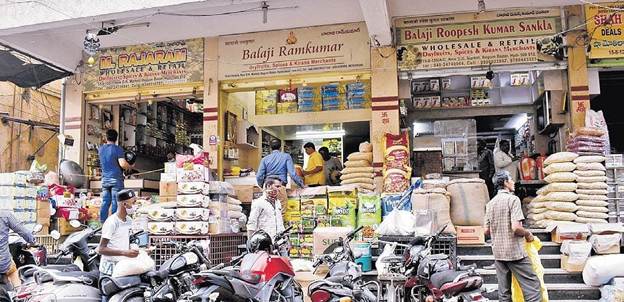
8. Physical Markets


12
A physical market is a place where buyers and sellers can meet in person to conduct transactions.
Examples include:
- Vegetable and fruit markets.
- Weekly village markets, commonly called haats.
- Clothing markets and shopping streets.
- Wholesale trading areas.
- Shopping malls and retail stores.
- Agricultural produce markets.
Physical markets remain useful because customers can inspect products directly, ask questions, compare items, and sometimes negotiate prices.
A person buying a clay pot, for instance, may want to check its size, thickness, finish, and durability before paying. A physical marketplace allows that inspection before purchase.
However, physical businesses must consider rent, transport, inventory storage, electricity, staffing, and other operating expenses. Their success also depends on location, customer footfall, competition, and product availability.
A shop located near a busy bus stand may attract more customers than a similar shop hidden in a quiet lane. Yet the bus-stand location might also have higher rent.
Therefore, choosing a physical market involves balancing customer access against operating costs.
9. Online and Digital Markets



An online market allows buyers and sellers to interact through internet-based platforms.
Examples include e-commerce websites, social media shops, online service marketplaces, and digital platforms connecting freelancers with clients.
A seller of handmade products may use Instagram to showcase items, WhatsApp to answer enquiries, and an e-commerce platform to process orders. A freelance graphic designer may find customers through a professional marketplace without opening a physical office.
Digital markets can offer several advantages:
- Access to customers outside the immediate locality.
- Lower entry costs than some traditional businesses.
- Convenient product discovery and communication.
- Easier presentation of product photographs and descriptions.
- Opportunities to collect reviews and measure customer engagement.
However, an online market is not automatically easy or inexpensive to enter.
Sellers may face strong competition, advertising expenses, delivery costs, platform commissions, payment disputes, returns, and the challenge of building customer trust.
Online visibility also does not guarantee sales. A product can receive thousands of views but very few purchases if its price is unsuitable, its quality is unclear, or the audience has little genuine interest.
The important lesson is that digital platforms provide access to a market; they do not replace the need for a useful offer, reliable service, and a workable business model.
10. Wholesale and Retail Markets
Wholesale and retail markets differ mainly in the quantities sold and the customers served.
Wholesale market
A wholesale market typically involves selling goods in larger quantities to retailers, distributors, businesses, or other commercial buyers.
For example, a wholesaler might purchase 1,000 notebooks from a manufacturer and sell them in cartons to local stationery shops.
Wholesale businesses often rely on volume, inventory management, supplier relationships, transport arrangements, and careful credit control.
Their profit per unit may be relatively low, so controlling costs and selling sufficient quantities can be particularly important.
Retail market
A retail market serves the final consumer. Retailers sell individual items or smaller quantities to people who want to use the products themselves.
A stationery shop selling one notebook to a student is operating in the retail market.
Retail businesses often focus on convenient locations, product variety, customer service, pricing, and repeat purchases.
Wholesale versus retail
| Factor | Wholesale | Retail |
| Typical buyer | Retailer or business | Final consumer |
| Typical quantity | Larger quantities | Smaller quantities |
| Main operational focus | Volume, distribution, stock control | Customer service, assortment, sales |
| Example | Selling cartons of notebooks | Selling individual notebooks |
These distinctions are general rather than absolute. Some wholesalers sell smaller quantities, and some retailers sell products in bulk.
A beginner should understand the difference because the amount of capital, storage, customer interaction, and inventory risk can vary substantially between the two models.
11. Goods and Services Markets
Markets can also be classified according to whether they exchange physical goods or services.
Goods markets
A goods market involves tangible products that can generally be seen and physically handled.
Examples include:
- Food and groceries.
- Clothes and footwear.
- Furniture.
- Electronics.
- Agricultural produce.
- Machinery and building materials.
Businesses in goods markets must consider product sourcing, manufacturing, inventory, packaging, delivery, and quality control.
Services markets
A services market involves activities or expertise provided to customers.
Examples include:
- Education and tutoring.
- Healthcare.
- Accounting and bookkeeping.
- Digital marketing.
- Graphic design.
- Repair and maintenance.
- Transport and logistics.
- Insurance advisory and brokerage services, where appropriately licensed.
A service provider may not need a large inventory of physical products, but the business still has costs. These might include training, tools, software, staff, travel, marketing, and the time required to complete each job.
For example, a person offering computer repair services may earn income by diagnosing problems and fixing devices. Their main resources may be technical knowledge, tools, spare parts, and customer relationships.
The distinction matters because selling a physical product and selling a service require different operating systems, even though both depend on understanding customers and delivering value.
12. Financial Markets
Financial markets enable the trading of financial instruments and the movement of capital between participants.
Common examples include the stock market, bond market, foreign exchange market, and derivatives market.

Corporate Finance Institute
+1
Stock market
A stock market provides systems through which shares in companies can be bought and sold.
Investors may purchase shares because they expect a company to grow, want potential dividend income, or wish to build a diversified investment portfolio. However, share prices can fall, and investors can lose money.
Bond market
Bond markets involve debt instruments through which governments, companies, and other eligible issuers may raise funds from investors. Bondholders generally receive interest according to the instrument’s terms, but risks such as default and changing interest rates remain.
Foreign exchange market
The foreign exchange market involves exchanging one currency for another. It serves international trade, investment, travel, and financial activity.
Derivatives market
Derivatives are financial contracts whose value depends on an underlying asset, rate, index, or other reference. They can be used for hedging or speculation, but some derivatives carry substantial risk.
Important distinction: Investing and trading are not the same as running an ordinary goods or services business. Financial markets involve specific risks, regulations, and financial knowledge. A beginner should learn the basics before committing money and should not assume that market participation guarantees profit.
13. Labour and Resource Markets
Markets do not deal only with finished products. They also connect organisations with the resources needed to produce goods and deliver services.
Labour market
The labour market connects employers seeking workers with people offering their skills and time.
For example, a mining company may need equipment operators, accountants, mechanics, safety professionals, and administrative staff. Candidates offer their capabilities, and employers evaluate experience, qualifications, availability, and salary expectations.
The wage offered may be influenced by the demand for a particular skill, the number of qualified candidates, working conditions, location, and applicable labour regulations.
Capital and other resource markets
Businesses also require resources such as machinery, buildings, finance, land, raw materials, and technology.
A manufacturer may need a machine to increase production. A farmer may need irrigation equipment. A small retailer may need working capital to purchase inventory.
These resources are obtained through purchases, rentals, loans, hiring arrangements, or other commercial agreements.
Understanding resource markets is important because a business’s success depends not only on selling to customers but also on obtaining the inputs required to serve them at a sustainable cost.
14. What Is a Target Market?
A target market is the specific group of customers a business chooses to serve.
Not every person is a suitable customer for every product. People have different needs, budgets, locations, preferences, and purchasing habits.
For example, consider a business selling affordable school bags.
Its potential target market could include parents of school-age children, schools purchasing bags in bulk, and students who buy their own accessories.
The business could narrow its focus further to parents looking for durable bags within a particular price range.
Defining a target market helps a business make better decisions about product design, pricing, distribution, and advertising.
Consider another example: a person selling handmade clay utensils.
Possible customer groups might include:
- Local households looking for traditional kitchen products.
- Restaurants interested in distinctive serving items.
- Gift buyers seeking handmade products.
- Tourists looking for local crafts.
- Online customers interested in traditional home décor.
These groups may want different designs, quantities, packaging, and prices. Trying to serve all of them immediately could create unnecessary complexity.
A practical starting point is to select one customer group, understand its needs, and test whether customers are willing to pay for the proposed offer.
A target market is not simply everyone who could theoretically buy a product. It is the group a business believes it can serve effectively and profitably.
15. Market Research and Market Analysis
Market research is the process of gathering information about customers, competitors, demand, prices, and other factors that influence a business decision.
Market analysis uses that information to assess the attractiveness of a market, its challenges, and the opportunities it may offer.
For example, suppose you want to start selling affordable household items in a village near a town.
Instead of immediately investing ₹30,000 in stock, you could investigate the local market first.
Useful questions include:
- Which products do residents purchase frequently?
- Where do they currently buy those products?
- What prices do competing shops charge?
- Which products are difficult to find locally?
- How many potential customers might purchase from you?
- What are the transport and storage costs?
- How much profit remains after all relevant expenses?
- Would customers buy repeatedly or only occasionally?
You can collect information by visiting shops, comparing supplier quotations, talking to potential customers, observing sales patterns, and testing a small quantity of stock.
A simple market research example
Imagine that you are considering selling reusable water bottles.
You discover that several shops already sell inexpensive plastic bottles. However, customers at a nearby coaching centre frequently ask for sturdy bottles that keep water cool.
That observation suggests a possible opportunity, but it does not yet prove that the business will succeed.
You would still need to check the purchase cost, expected selling price, competitors, product quality, and how many customers are willing to buy.
A small trial may be safer than placing a large order immediately.
The central principle is simple: use evidence to reduce uncertainty before committing substantial money.
16. Market Segmentation
Market segmentation means dividing a broader market into smaller groups of customers who share relevant characteristics.
Businesses use segmentation because different customers often respond differently to the same product, price, or marketing message.
Common approaches include the following.
Demographic segmentation: Groups customers according to characteristics such as age, income, occupation, or household stage.
Geographic segmentation: Divides customers by location, such as a village, town, state, or country.
Psychographic segmentation: Groups people according to interests, values, lifestyles, or attitudes.
Behavioural segmentation: Considers buying frequency, product usage, brand preferences, and purchase behaviour.
Imagine a clothing seller serving customers in a small town. The broad clothing market may contain schoolchildren, college students, working adults, and older customers.
The seller might decide to specialise in affordable formal shirts for working professionals. This narrows the product selection and makes it easier to identify suitable suppliers and communicate with potential buyers.
Segmentation can improve marketing efficiency because businesses can focus their time and resources on people most likely to value their offers.
However, segmentation should be based on relevant evidence rather than stereotypes. A group may look attractive on paper but still lack sufficient demand or purchasing power.
The purpose is not to divide customers unnecessarily. It is to understand meaningful differences that help a business serve people better.
17. Market Competition and Market Structures
Market competition describes how businesses interact when trying to attract customers. The number of sellers, the similarity of their products, entry barriers, and the availability of substitutes can influence the level of competition.
Economists commonly study four basic market structures. These are models that help explain real markets, although many industries do not fit perfectly into just one category.

International Monetary Fund
+1
Perfect competition
Perfect competition is a theoretical model with many buyers and sellers, similar products, and relatively easy entry and exit.
In this model, an individual seller has little ability to influence the market price.
Some agricultural commodity markets may share certain competitive characteristics, although real-world conditions often differ from the model.
Monopolistic competition
Monopolistic competition involves many businesses offering products or services that are similar but differentiated in some way.
Restaurants, salons, and clothing retailers often compete through location, quality, branding, customer experience, and variety.
For example, two salons may offer haircuts at similar prices but attract different customers because of service quality or convenience.
Oligopoly
An oligopoly exists when a market is dominated by a small number of major sellers.
Businesses in these markets may pay close attention to competitors’ prices, product launches, and strategic decisions. Entry barriers can be significant, depending on the industry.
Monopoly
A monopoly exists when one seller has substantial control over the supply of a product or service for which customers have limited alternatives.
Monopolies may arise for different reasons, including legal rights, control of essential resources, or natural cost advantages. Their market power and behaviour depend on the specific circumstances and applicable regulation.
Why market structure matters to a business
Understanding competition helps a business decide how to position its products.
If many shops sell identical products, competing only on price can reduce margins. A business may need to improve convenience, reliability, product selection, or customer service.
If customers have few alternatives, the seller may enjoy more pricing power, but it must still consider customer expectations, potential new competitors, and legal obligations.
The goal is to understand how a market behaves, not simply to label it.
18. Real-Life Market Examples
The concept of a market becomes easier to understand when applied to familiar situations.
Example 1: A vegetable market
Farmers bring vegetables to a local mandi. Traders and retailers purchase stock, and households buy vegetables from nearby shops.
Weather conditions, transport costs, harvest size, and consumer demand can influence prices.
This is an example of a physical goods market.
Example 2: A mobile phone market
Consumers compare smartphones based on price, battery life, camera quality, storage, brand reputation, and software features.
Manufacturers, distributors, online retailers, and local shops compete for customers.
The market includes both physical and digital sales channels.
Example 3: A freelance design market
A graphic designer offers services to businesses that need logos, posters, advertisements, or social media graphics.
Customers compare portfolios, turnaround times, prices, and reviews before choosing a designer.
This is a services market that can operate online.
Example 4: A local repair market
Suppose residents of a town struggle to find reliable mechanics who repair agricultural equipment.
An entrepreneur could investigate the demand for repair services, the availability of trained workers, the cost of tools, and the number of competing providers.
If customers are willing to pay a sustainable price and the entrepreneur can deliver reliable work, the gap may represent a business opportunity.
Example 5: A financial market
An investor buys shares in a listed company through a regulated trading system.
The investor is participating in a financial market rather than purchasing a physical product for personal use.
The transaction may provide an investment opportunity, but the investor also faces the possibility of losing money.
These examples demonstrate that markets can look very different while sharing the same fundamental idea: they connect participants who want to exchange something of value.
19. How to Identify a Business Opportunity in a Market
Understanding a market is especially useful when you want to start a business. However, a large market is not necessarily a good opportunity for a beginner.
A market may be large but dominated by established competitors. Another may be smaller but offer a clear customer need that you can meet reliably.
A sensible approach is to examine the opportunity before investing heavily.
Step 1: Identify a real customer problem
Look for something customers struggle to obtain, afford, understand, or access conveniently.
Examples include a shortage of reliable repair services, limited local product variety, inconvenient delivery, or poor customer support.
Do not assume that every complaint represents a paying opportunity. Investigate how often the problem occurs and whether people would pay to solve it.
Step 2: Define your potential customers
Specify who experiences the problem.
Instead of saying, “Everyone needs household products,” narrow the description to something like, “Families in three nearby villages who regularly travel to town for basic household supplies.”
A clear customer group makes research easier.
Step 3: Study existing competitors
Find out who already serves these customers and what they offer.
Compare product quality, prices, availability, delivery, reliability, and customer feedback.
Competition is not always a reason to avoid a market. Existing competitors can indicate that customers already spend money in that category. The key question is whether you can serve a group of customers more effectively or sustainably.
Step 4: Calculate the business economics
Estimate the complete cost of serving customers.
For a product business, costs may include:
- Purchase price.
- Transportation.
- Packaging.
- Storage and handling.
- Platform or payment charges.
- Returns, damage, or unsold stock.
- Advertising and other overheads.
For a service business, consider labour, tools, software, travel, training, and the time required to complete each job.
Suppose a product costs ₹100 to purchase, ₹10 to transport, and ₹5 to package. If it sells for ₹150, the remaining ₹35 is the amount left before accounting for other expenses.
That is not necessarily the final profit.
This distinction matters because sales revenue and profit are different. A business can sell many products and still lose money if its costs are too high.
Step 5: Test with a small experiment
Before buying large quantities or committing to expensive equipment, test your assumptions.
You might collect pre-orders, offer a limited service, purchase a small batch of stock, or approach a few potential business customers.
Measure actual interest and completed purchases rather than relying only on compliments or social media likes.
Step 6: Review the results and improve
After the test, examine what happened.
- Did people buy?
- Which products sold fastest?
- Did customers return?
- Were costs higher than expected?
- Did the price leave enough margin?
- What complaints or requests appeared repeatedly?
Use the results to decide whether to continue, change the offer, or test another idea.
A market opportunity becomes more credible when evidence supports customer demand, the business can deliver the product or service, and the numbers make commercial sense.
20. Conclusion
A market is an arrangement that connects buyers and sellers for the exchange of goods, services, or resources. It can be a physical location, an online platform, a financial trading system, or a wider network of customers and businesses.
Markets are important because they make exchange possible, help influence prices, create competition, provide information, and support economic activity.
Understanding demand, supply, pricing, competition, target customers, and market research helps explain how markets operate. These concepts are useful whether you are a student learning economics, a consumer comparing products, an employee trying to understand an industry, or an entrepreneur exploring a business idea.
The most practical lesson is this: do not judge a market only by how many people might need a product. Understand who will pay, what they value, what alternatives they have, and whether you can serve them at a sustainable cost.
A market becomes a meaningful business opportunity when a genuine customer need meets a suitable offer and workable economics. Research, small experiments, and careful calculations can help you distinguish a promising opportunity from an attractive idea that may not work in practice.
Frequently Asked Questions (FAQs)
1. What is a market in simple words?
A market is a system or arrangement where buyers and sellers connect to exchange goods, services, or resources. It can be a local shop, a village bazaar, an online shopping platform, or a financial exchange.
2. What are the four main types of markets in economics?
The four commonly studied market structures are perfect competition, monopolistic competition, oligopoly, and monopoly. They differ in the number of sellers, product differentiation, barriers to entry, and the degree of control sellers have over prices.
3. What is the difference between a market and a marketplace?
A marketplace usually refers to a physical or digital venue where transactions take place. A market is a broader concept that can include buyers, sellers, competing products, customer demand, and pricing arrangements across multiple venues.
4. How does demand affect market prices?
When demand increases while supply remains similar, prices generally face upward pressure. When demand decreases while supply remains similar, prices generally face downward pressure. The actual result depends on other conditions, including costs, competition, and how buyers and sellers respond.
5. How can a beginner find a profitable market for a small business?
Start by identifying a specific customer problem, researching potential buyers and competitors, comparing costs and selling prices, and testing the idea on a small scale. Track actual purchases and profit margins before making a large investment. A market with many customers is not automatically profitable; the business must be able to serve them at a sustainable cost.